

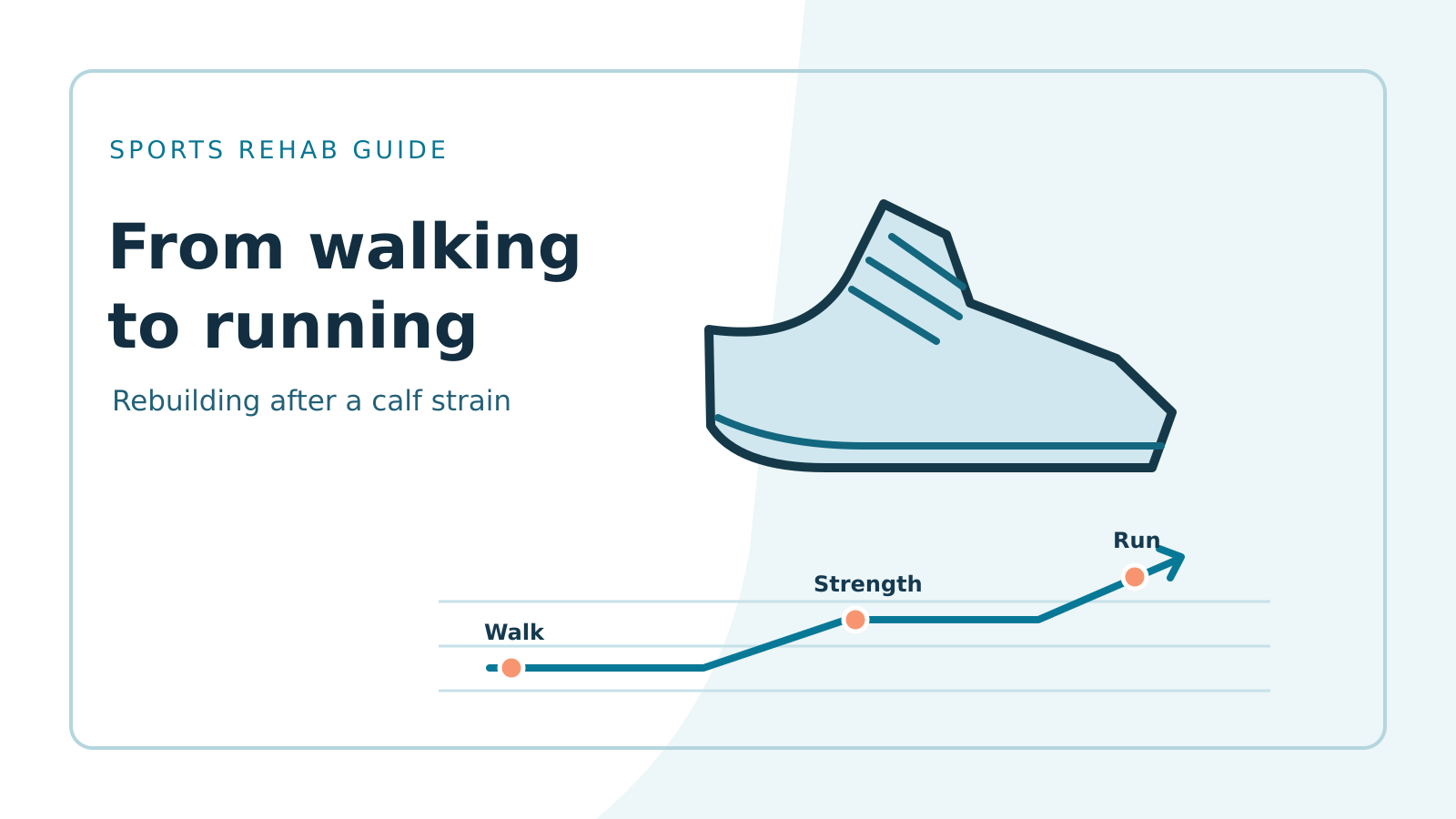
The first easy walk after a calf injury can feel encouraging. It is also a different task from running up a hill or pushing into a sprint. If a clinician has diagnosed a calf strain, use this guide to ask what your leg should be ready to do before you return to faster activity.
First, make sure the pain belongs in a rehab plan
Not all calf pain is a muscle strain. A sudden pop with a major loss of push-off or new difficulty walking deserves prompt medical assessment. Get urgent medical assessment for new unexplained one-sided swelling, warmth, redness or tenderness, which can be signs of a blood clot. For sudden shortness of breath, chest pain, coughing up blood or fainting, call 911. Do not try an exercise or massage to see if those symptoms go away.
Build from the activity you can repeat
Discuss your next step with the clinician who knows the severity of the injury. They may look at your walking pattern, ankle movement and calf strength before asking about the demands of your sport. A short walk at a comfortable pace is not the same challenge as brisk walking, sustained jogging or hard acceleration.
Everyday movement: Can you walk comfortably without changing the way you step? Which hills, stairs or distances still cause trouble?
Strength and tolerance: What strength work is appropriate now, and how should you adjust it if pain or swelling returns?
Specific activities: Which is the right first step for you: more walking, a shorter easy run or a supervised drill? Ask how your plan will handle speed, slopes or cutting.
Use those answers to set a progression rather than picking a date for a full return. If a new activity brings back a limp, swelling or increasing pain, pause that step and check in before adding more.
Common questions
Is it safe to run as soon as I can walk without pain?
Walking comfortably is encouraging, but it does not by itself establish that your calf is ready for running. Ask your clinician to consider movement, strength and the type of running you want to return to.
Can a calf strain and an Achilles injury feel similar?
Yes. Both can cause pain near the back of the lower leg and affect push-off. Do not rely on the location of the pain alone, especially after a sudden pop or marked weakness.
Get help planning your return
For non-emergency sports injury rehabilitation, call Orlando City Health & Wellness in Orlando at (407) 250-5566 or Winter Park at (407) 960-6702. Seek urgent care first if you have warning signs or are unsure whether the injury needs immediate assessment.
Sources: Frimley Health NHS: Calf strain; University Hospitals of Derby and Burton: Calf strain; CDC: Signs and symptoms of blood clots. This article is educational and does not clear anyone to return to sport.