

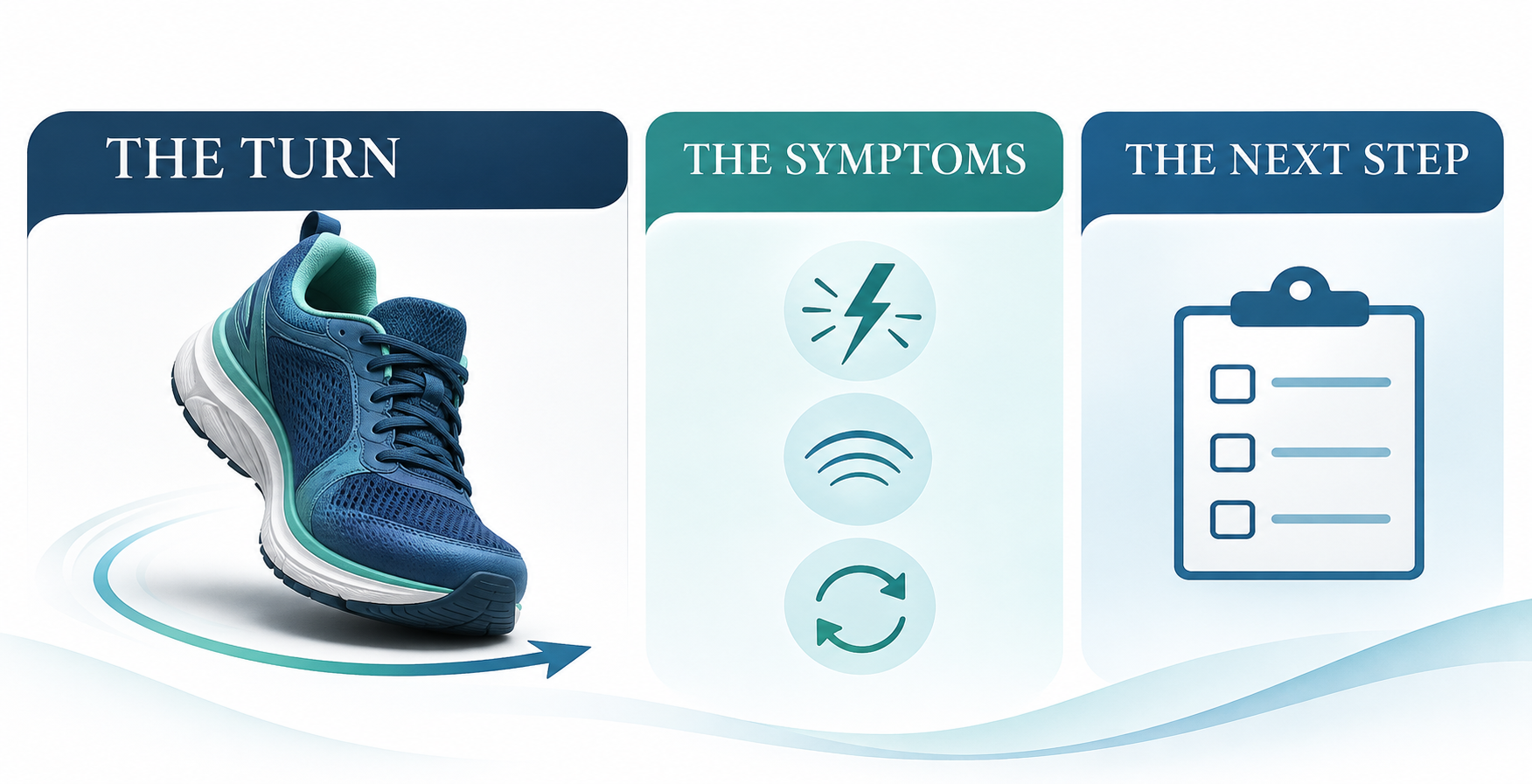
A quick turn can change an ordinary game or errand into a question: why does my knee no longer feel steady? Our magazine’s sports-injury feature treats sudden giving way as a reason for assessment. The next step is to find out what was injured, not to test the knee through another round of activity.
Start with assessment, not an ACL self-diagnosis
The anterior cruciate ligament helps stabilize the knee during rotation. It can be injured during a sudden pivot or landing, including without contact from another person. But instability does not identify the injured structure by itself. A clinician considers the history, examines the knee and decides what testing is needed. An ACL injury can coexist with damage to other structures. AAOS explains ACL injuries.
When not to wait for routine rehabilitation
Seek urgent medical assessment if you cannot move the knee or bear weight, it is very painful, badly swollen or changed shape, or it locks or gives way. A hot, red knee with fever or chills also needs urgent attention. Do not use an online exercise plan to delay assessment of these symptoms. NHS knee-pain guidance.
Bring the sequence, not just a pain score
Before the appointment, make a short note of the movement when the problem started, whether there was contact, and what happened next. Describe what changed: walking across a room, getting out of a car or approaching stairs. Bring prior knee records and a list of your medicines. This is an appointment checklist, not a test of whether you have torn a ligament.
Tell your clinician what “getting back to normal” means to you. A desk job, a job with lifting and a pivoting sport ask different questions. Include the task you are worried about most, even if it seems ordinary. That gives the conversation a useful destination beyond a number on a pain scale.
Treatment is a decision, not a single pathway
An ACL diagnosis does not determine one treatment for everyone. Injury severity, instability, activity demands and other individual factors guide the discussion, including whether surgery is appropriate. Ask who will coordinate rehabilitation and which restrictions apply now. Avoid borrowing a teammate’s return date or exercise progression.
Questions to take with you
What structures appear to be injured, and what remains uncertain?
Would imaging change the plan?
What can I safely do while awaiting the next appointment?
What needs to improve before I progress activity?
Schedule a non-emergency rehabilitation discussion
Orlando City Health & Wellness offers sports injury physical therapy. After an acute injury is appropriately assessed, call to discuss rehabilitation at your preferred office: Orlando 407-250-5566; Winter Park 407-960-6702. Urgent symptoms require urgent care rather than waiting for a routine appointment.
Does giving way always mean a torn ACL?
No. Symptoms alone cannot establish the diagnosis. Assessment helps identify the cause.
Can I return as soon as pain improves?
Ask your treating clinician for your specific progression. Pain improvement is not a stand-alone clearance rule.
Educational information, not an individual diagnosis or exercise prescription.