

EVERYDAY COMFORT / PHYSICAL THERAPY
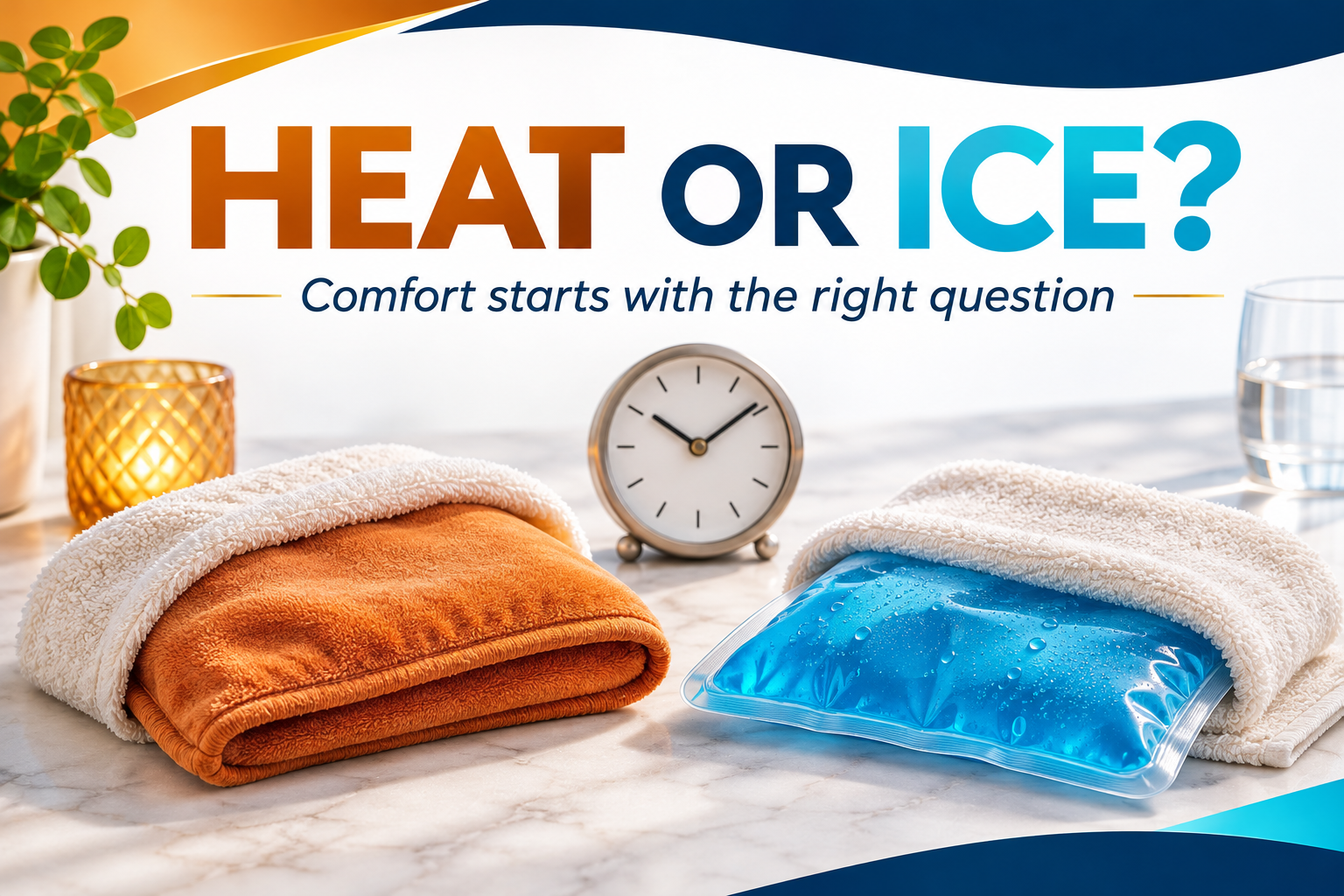
A cold pack is waiting in the freezer. A heating pad is in the closet. When a sore area interrupts your day, choosing between them can feel surprisingly confusing. Start with what happened, whether there is swelling, and whether you can safely feel temperature on the skin.
Our Volume 3 magazine’s physical therapy feature focuses on care built around everyday movement. Heat and cold can sometimes help with comfort, but a useful recovery plan also asks why the pain began and what you need to do again.
When a cold pack may be useful
For a recent minor sprain or strain with swelling, a wrapped cold pack is a common short-term comfort measure. The American Academy of Orthopaedic Surgeons advises limiting an application to no more than 20 minutes and keeping a barrier between ice and skin. Follow the product instructions and your clinician’s advice; more cold or more time is not automatically better.
Do not use temperature treatment to make an injured area numb enough to keep exercising. Stop activities that provoke injury pain. If an injury is severe or you cannot bear weight, get assessed rather than experimenting with home treatments.
When gentle warmth may fit
Warmth may ease muscle discomfort or stiffness. Aim for comfortable warmth, never a hot sensation. Avoid heat on a newly injured, swollen or bruised area and over an open wound. Guidance about timing varies with the injury; ask your clinician rather than assuming every painful area should switch to heat after a fixed number of hours.
A heating pad is a comfort tool, not a diagnosis. If symptoms keep returning each time you walk, lift or work, tell your care team what brings them on.
Protect your skin first
Keep a suitable towel or cloth barrier between the pack and your skin.
Check the skin regularly. Remove a cold pack promptly for excessive numbness, painful blotchiness or bluish discoloration.
Do not use either treatment over damaged skin without professional advice.
If you have reduced sensation, poor circulation or difficulty judging temperature, ask a clinician before using heat or cold.
Choose a time when you can pay attention to the application and follow the device’s instructions. Ask your physical therapist to demonstrate the method if you are unsure.
Bring three observations to your appointment
Make a brief note of when the problem began, whether swelling is present, and which everyday activity is limited. Also say what you tried, how long you used it, and whether it helped or irritated the skin. These details can make a conversation about your physical therapy plan more specific.
Frequently asked questions
Should I use heat or ice for every ache?
No. The safest choice depends on the cause of the symptoms and your health history. You do not have to use either when it is uncomfortable or unsuitable.
Does temporary relief mean the injury has healed?
No. Comfort and readiness for activity are different questions. Follow your rehabilitation instructions rather than using pain relief alone to decide when to resume a demanding task.
When should I get medical care?
Seek prompt care for severe pain, marked swelling, a visible deformity or inability to put weight on the area. Persistent or worsening symptoms also need assessment. Call 911 for an emergency.
Ask about your next step
For non-emergency movement and rehabilitation questions, contact Orlando City Health & Wellness: Orlando 407-250-5566 or Winter Park 407-960-6702. Learn about our physical therapy services.
Sources and further reading
Magazine inspiration: Orlando City Health & Wellness, Volume 3, Dr. Michael Gampolo revised 40-page edition, page 8. Clinical sources checked November 9, 2026. General educational information; follow individualized medical advice.