

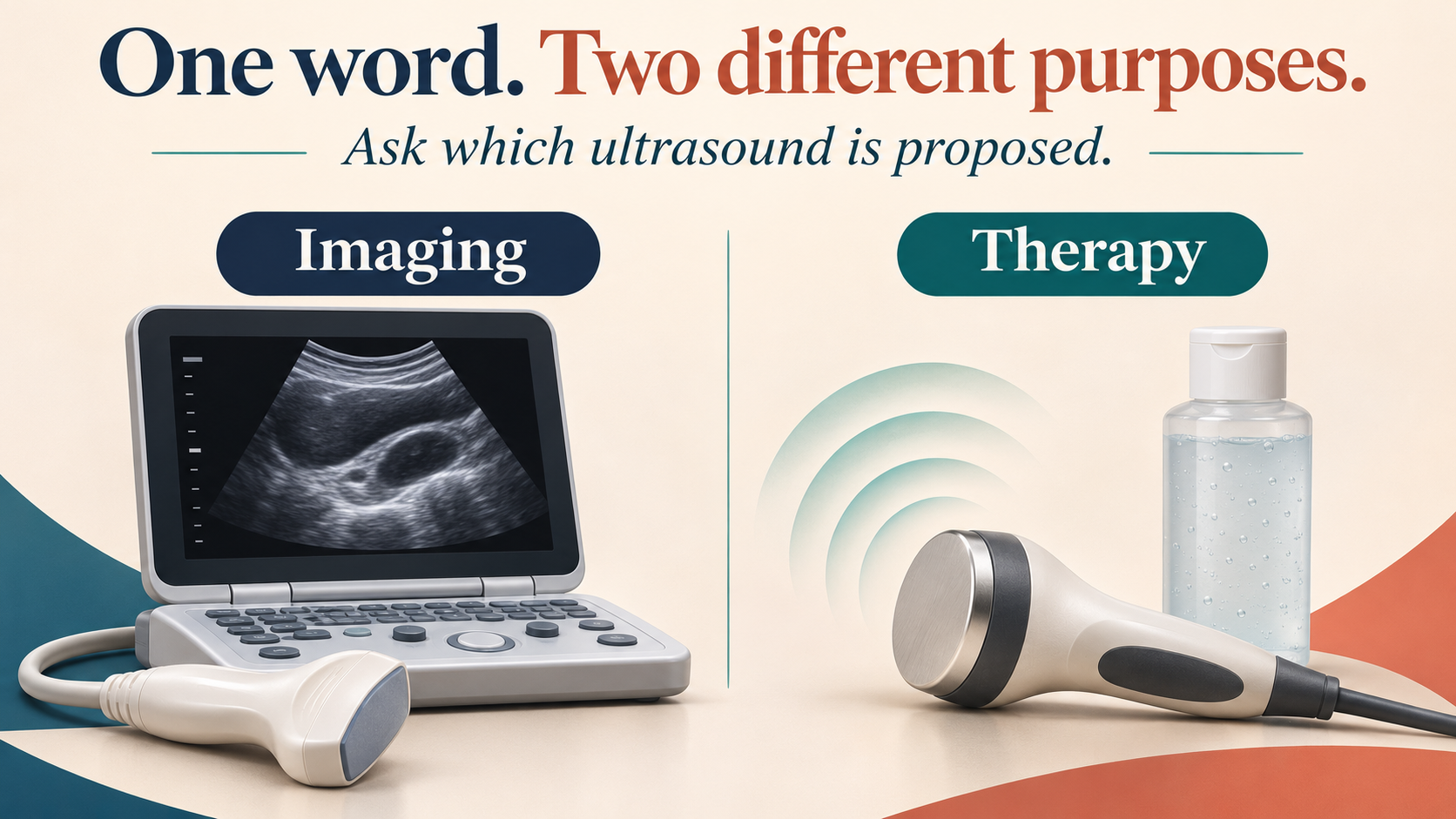
If ultrasound comes up during a rehabilitation visit, ask what the clinician means. An ultrasound scan creates images that help evaluate structures inside your body. Therapeutic ultrasound delivers sound-wave energy as a treatment. Understanding the purpose helps you ask better questions about whether it belongs in your care plan. NIH overview of ultrasound.
What diagnostic ultrasound does
Diagnostic ultrasound uses high-frequency sound waves and their returning echoes to form images. Depending on the examination, it can show internal structures, movement or blood flow. It does not use the ionizing radiation associated with X-rays. A clinician chooses an examination based on the medical question being investigated. FDA explanation of ultrasound imaging.
Receiving therapeutic ultrasound during physical therapy does not mean an imaging study has been performed. If you need an assessment of a possible injury, ask whether examination alone is sufficient or whether imaging would change your care.
What therapeutic ultrasound involves
In rehabilitation, some ultrasound devices are designed to deliver energy that produces heat in selected tissues. A clinician typically applies gel and moves a handheld treatment head over the area. The gel helps sound energy pass into the body. For these devices, proper contact and movement help reduce the risk of overheating. FDA guidance on ultrasonic diathermy devices.
The ultrasound used in rehabilitation should also be distinguished from specialized, high-intensity ultrasound procedures used for other medical purposes. Sharing the word ultrasound does not make the treatments interchangeable. NIH ultrasound overview.
Keep expectations specific
A treatment's proposed mechanism does not establish that it will meaningfully improve every condition. For example, a Cochrane review found little evidence supporting ultrasound for chronic nonspecific low-back pain. Evidence was often uncertain, and adding ultrasound to exercise had not shown a clear benefit in the studies reviewed. Those findings concern that particular condition, rather than every possible use of ultrasound. Cochrane review of ultrasound for chronic low-back pain.
If ultrasound is proposed, ask which problem it is intended to address and what evidence supports that choice. Agree on a practical goal, such as tolerating a particular movement more comfortably, and when to review progress. Avoid assuming that a sensation during treatment, or brief symptom relief afterward, proves that an injury has healed.
Ultrasound may be offered alongside an exercise program after assessment. South Tees NHS patient information. Ask how it fits with exercise, education or manual care, and what you should work on between appointments.
Questions to ask before treatment
Bring these questions to your visit:
What is my working diagnosis, and why are you recommending ultrasound for it?
Is the goal symptom relief, easier movement or something else?
What are the alternatives, including a plan without ultrasound?
How will we measure benefit and decide whether to continue?
What should I feel, and what should I report immediately?
What will it cost, and has my coverage been checked?
Share your medical history before treatment, particularly pregnancy, implanted devices, cancer, infection, blood-clot or circulation problems, recent surgery, and reduced skin sensation. These can affect whether or where treatment is appropriate. Device-specific instructions and a clinician's assessment matter. Tell the clinician promptly about burning, pain or other discomfort. FDA safety guidance.
Frequently asked questions
Is therapeutic ultrasound the same as electrical stimulation?
No. Ultrasound uses sound waves. Electrical stimulation delivers electrical pulses through electrodes. Ask which treatment is proposed and its purpose. OCHW explanation of electrical stimulation.
Should I expect to feel the ultrasound working?
You may mainly notice the gel and contact with the treatment head. A strong sensation is not required. Report discomfort rather than trying to tolerate it. South Tees NHS patient information.
Does OCHW offer therapeutic ultrasound?
OCHW's service FAQ lists selective use within a broader care plan. Contact Orlando City Health & Wellness to confirm availability at your preferred office and discuss whether an evaluation is appropriate. A listed service is not a recommendation for every patient.
General patient education only. This article does not provide a diagnosis, device settings or a self-treatment protocol.