

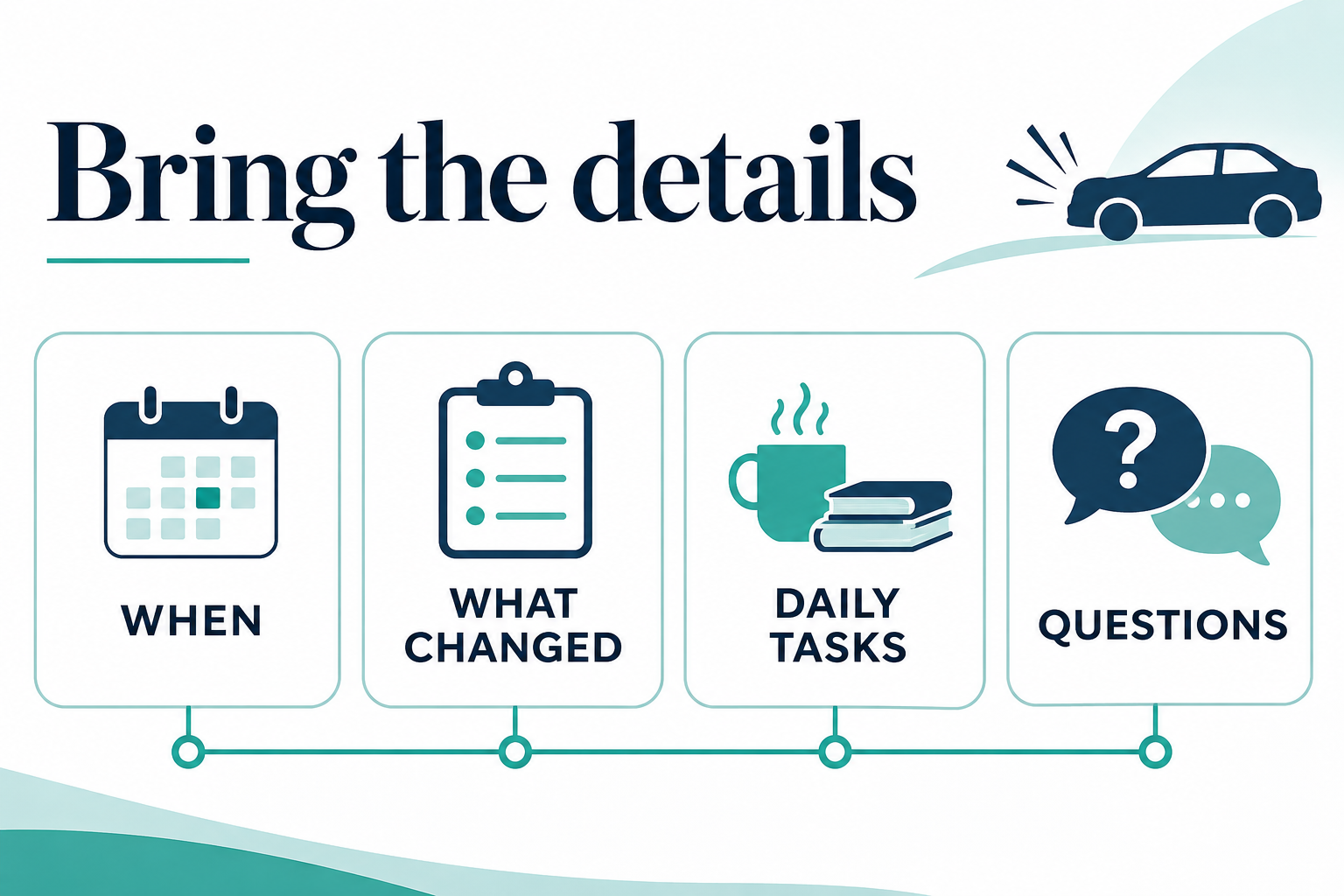
The appointment question sounds simple: “What has changed since we last saw you?” After a collision, answering from memory can be harder than expected. A few brief notes can give the conversation a useful starting point without turning recovery into a paperwork project.
Our magazine's Volume 1 print-review edition, printed page 20, encourages people to report symptoms after a crash. This original follow-up worksheet puts that idea into practice. It is an organizational tool, not a diagnostic score, medical record replacement or test of whether an injury is serious.
Start with observations, not a diagnosis
Write what you noticed and when. You do not need to decide whether a symptom comes from a muscle, disc or nerve. Whiplash symptoms can begin several hours after the injury; a change from the first day is worth telling the treating clinician. NHS whiplash guidance.
Keep the notes short enough that you will use them. Paper or a private note on your phone is sufficient. There is no requirement to record symptoms constantly or to recreate painful movements for the sake of an entry.
Copy this follow-up record
Date and approximate time:
What I noticed, and where:
What was different from my previous note:
An everyday task affected:
What I was doing when I noticed it:
Care instructions or medicines I followed:
My question for the clinician:
Leave a field blank if you do not know. Accuracy matters more than filling every line. Include improvement as well as difficulty; the purpose is a useful account, not proving that every day was worse.
Bring the context that changes the conversation
Bring your current medicine and supplement list, any discharge instructions, and the names of other clinicians involved in your care. Explain which symptom or question you most want addressed. At the end of the visit, clarify the next step and when to contact the office sooner. MedlinePlus appointment preparation guidance.
Do not change a medicine, add an exercise or test your driving ability because of something in the worksheet. Ask your treating clinician for individualized instructions. Our separate driving-after-whiplash guide offers questions for that conversation.
Do not wait for a complete worksheet to get help
A record must never delay care. After a head injury, a worsening headache that does not go away, repeated vomiting, seizure, new weakness, marked confusion or difficulty waking requires emergency assessment. Call 911 for emergency symptoms. CDC concussion danger signs.
For more context, see our headache after a car accident article. Keep personal notes private and ask the office how to share them securely; do not post health information in public reviews or social-media comments.
Frequently asked questions
Do I need a symptom record before booking?
No. Arrange appropriate care promptly. The record is optional preparation, not an appointment requirement.
Can the record show which injury I have?
No. It organizes observations for a clinician. An examination and, when indicated, testing guide diagnosis.
Should I include symptoms that improved?
Yes. A balanced description of what changed, including what became easier, makes the discussion more specific.
Schedule your follow-up
For non-emergency auto-injury care, schedule an office appointment. Call Orlando at 407-250-5566 or Winter Park at 407-960-6702. Bring your questions and any instructions from the clinician who first evaluated you.
General education only. Follow your treating clinician's plan.