

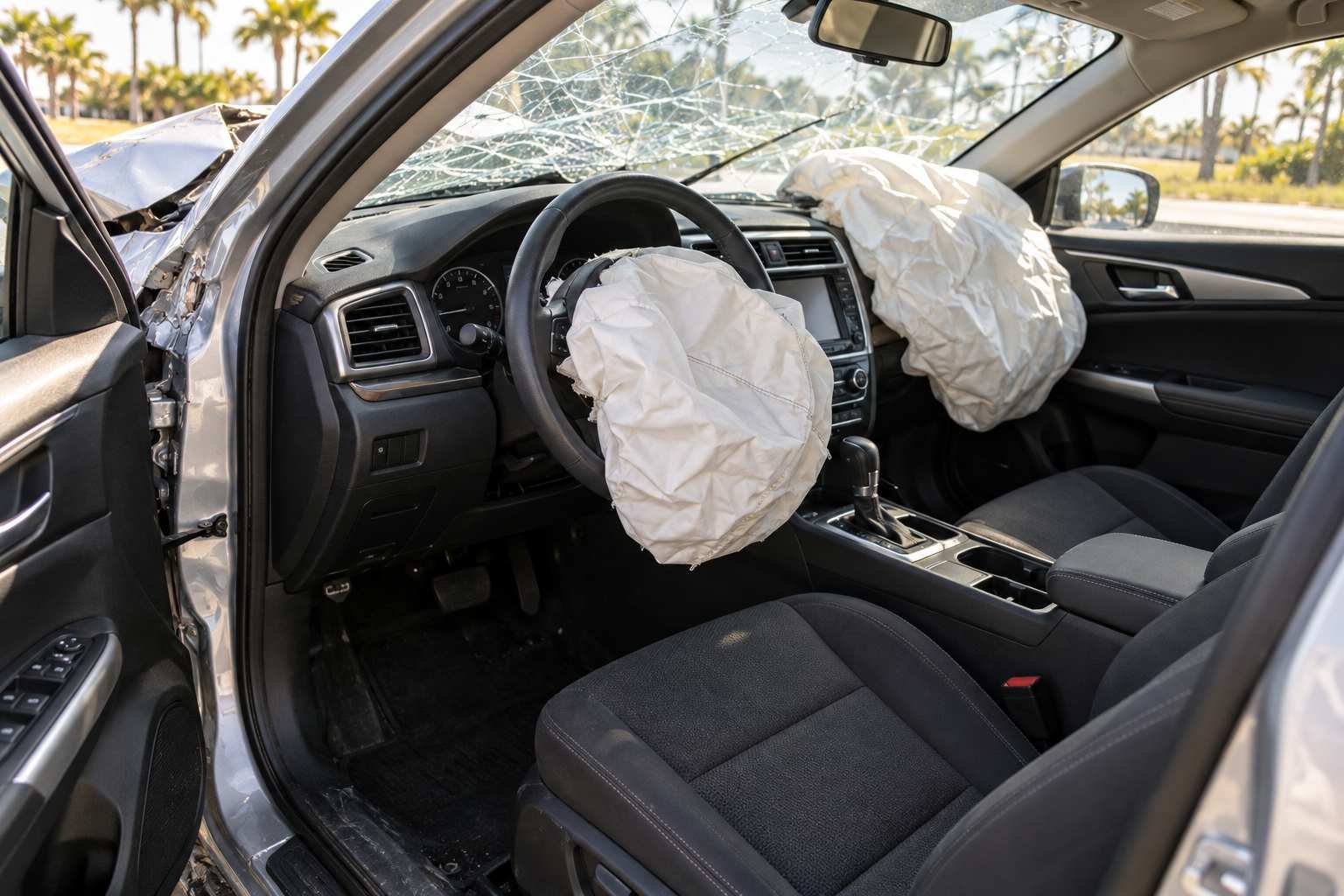
Neck movement, alertness and medication effects matter when planning a return to driving. Vehicle-interior image from the OCHW magazine’s “Common Injuries After a Car Crash,” page 20; illustrative, not a documented patient event.
The car may be ready to leave the repair shop before you feel ready to drive it. After a collision, turning toward traffic, concentrating at an intersection, or sitting through a commute can raise questions that a repair estimate cannot answer.
If you are wondering when you can drive after whiplash in Orlando or Winter Park, start with your treating clinician. This article is a conversation guide, not a driving clearance test. Do not take a test drive to find out whether an injury or medication affects you.
Begin with the symptoms, not a deadline
Whiplash can cause neck pain, stiffness, headaches, and shoulder or arm discomfort. Symptoms may take hours to appear. New tingling, weakness, severe pain, or difficulty walking needs prompt medical assessment rather than an assumption that it is ordinary soreness. The NHS whiplash guide explains these symptoms and warning signs.
The Orlando City Health & Wellness magazine feature “Common Injuries After a Car Crash,” on page 20, makes a useful starting point: neck symptoms, headaches, and brain fog deserve attention after a collision. The next practical question is how those symptoms affect everyday responsibilities, including driving.
Tell your clinician when the crash happened, which symptoms appeared later, and whether they change during the day. Bring emergency-department instructions and imaging reports if you have them. If another provider already restricted driving, follow that restriction and ask that provider about reassessment.
Ask about the movements driving requires
Safe driving involves more than facing forward. Discuss whether pain or restricted neck movement could interfere with looking over your shoulder, checking surrounding traffic, steering, or responding quickly to an unexpected situation. Princess Alexandra Hospital's whiplash guidance advises against driving when pain, stiffness, medication, or restricted movement affects safe control.
Useful questions for your appointment include:
Which parts of my examination matter for returning to driving?
Do my current restrictions apply to all driving, including short trips?
What needs to change before you reassess me?
Should a different clinician evaluate any of my symptoms first?
Describe your actual driving responsibilities. A school pickup, a delivery shift, and an extended highway commute present different practical demands. Giving your clinician that context makes the discussion more useful than asking only, “How many days should I wait?” These questions do not establish a universal number of days or a home test for clearance.
Mention dizziness, brain fog, and visual symptoms
Do not leave concentration problems out of a visit focused on your neck. Dizziness, vision problems, feeling slowed down, and difficulty thinking clearly can occur with a concussion. These symptoms require assessment; an online article cannot determine their cause. CDC lists symptoms that may follow a mild traumatic brain injury.
For patients with a concussion, CDC advises clinicians to be cautious about a return to driving, particularly when attention, processing speed, or reaction time is affected. Ask how your symptoms change the plan and whether further evaluation is needed. Read CDC's return-to-activity guidance.
Review every medication you take
Bring a list of prescriptions, over-the-counter products, and when you take them. Ask your clinician or pharmacist whether any can impair driving, how a new dose changes that advice, and whether the effects can continue into the next day. Some medicines cause drowsiness, blurred vision, dizziness, or impaired attention. Read the label and follow its driving warnings. The FDA explains why some medicines and driving do not mix.
Do not change prescribed treatment simply to make a commute possible. Ask for a medication and transportation plan. Arranging a ride for appointments also gives you a way to follow restrictions without missing care.
Leave with a clear follow-up plan
If a concussion has been diagnosed, CDC recommends asking for written instructions about returning to activities such as driving. Its recovery guidance also recommends contacting your provider when symptoms worsen or do not improve.
Write down who will reassess you, when to contact that office, and what symptoms require an earlier call. Ask whether your work duties need separate instructions. Keep a brief note of symptoms and activities to discuss at follow-up, rather than repeatedly testing your limits behind the wheel.
Orlando City Health & Wellness offers auto injury evaluation and coordinated referrals and physical therapy. Appropriate rehabilitation may be part of an individualized plan. Attending a therapy visit does not automatically mean you are cleared to drive afterward.
Know when emergency care comes first
After a crash, call 911 or seek emergency care for a worsening headache that does not go away, repeated vomiting, seizures, new weakness, slurred speech, confusion, or difficulty waking. Do not drive yourself. CDC identifies these as danger signs after possible brain injury.
Frequently asked questions
Can I drive if my neck pain is mild?
Pain intensity alone does not answer the question. Discuss movement, alertness, medications, and other symptoms with your clinician before resuming driving.
Does a short trip count?
Yes. A short journey still requires safe control and reactions. Follow your restrictions even when the destination is nearby.
Does physical therapy clear me to drive?
No appointment automatically provides clearance. Ask your treating clinician how the examination and your progress affect the driving plan.
What should I bring to an injury appointment?
Bring discharge instructions, available imaging reports, a medication list, and your questions about driving and work.
Plan your next step
For non-emergency injury care, call Orlando City Health & Wellness at 407-504-0117, or visit our appointment page. Tell the team about your symptoms and any existing restrictions so they can help arrange an appropriate next step.
General educational information. It does not diagnose an injury or provide individual medical advice or driving clearance.