
Instrument-Assisted Soft Tissue Mobilization (IASTM): What to Expect
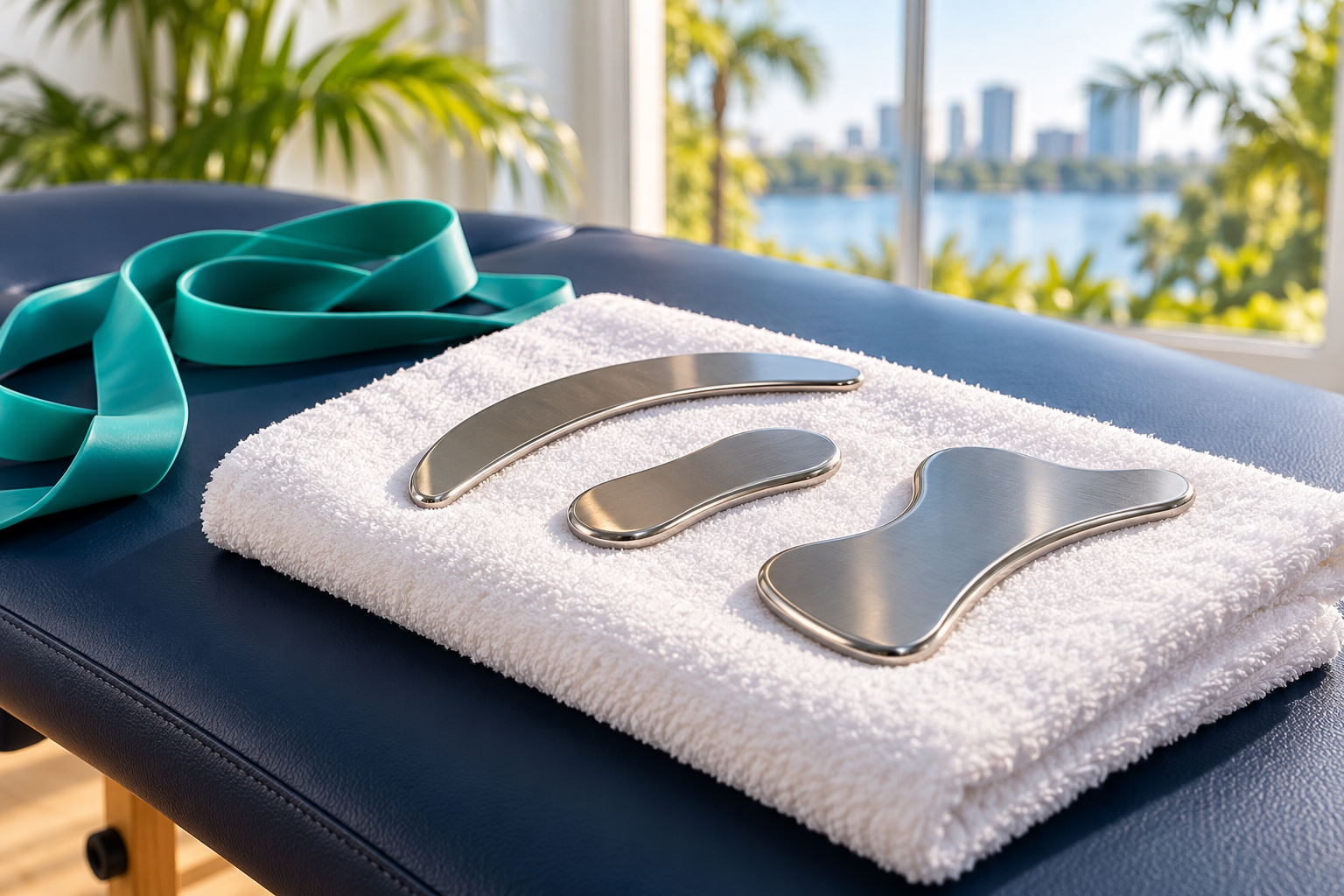
Instrument-assisted soft tissue mobilization, or IASTM, uses a smooth handheld tool to apply pressure and strokes to soft tissues. Graston Technique is one form of IASTM. It may be considered within an individualized rehabilitation plan, rather than as a treatment everyone needs.
This page expands on the Graston/IASTM feature in Orlando City Health & Wellness Magazine, Volume 3, page 14. OCHW's provider directory lists Dr. Brooks Saunders, DC, with Graston certification. Contact our team to confirm the appropriate provider and location for your visit.
What happens during an appointment?
Your provider first asks about the symptoms, relevant health history and activities you want to improve. The examination helps determine whether soft-tissue treatment is appropriate or whether another approach or further evaluation is needed.
If IASTM is selected, the provider may apply a lotion and move a blunt instrument over the area being treated. Pressure, positioning and the treatment area should suit your condition and tolerance. Tell your provider if the sensation becomes sharp, painful or uncomfortable; you do not need to endure severe pressure.
Movement remains part of the conversation. Strengthening, stretching or a prescribed home program may accompany soft-tissue work. The number and timing of visits should depend on your plan and response, not a promise that a particular number of sessions will solve the problem.
What does the evidence say?
Research results are mixed. A 2023 review did not find clinically meaningful improvements in pain, function or motion and rated the evidence very low certainty. A 2025 review found pain and function benefits when IASTM was added to other care, with moderate certainty for pain and low certainty for function. Studies differed in participants, treatment methods and comparison care.
These findings do not establish that IASTM is necessary for every soft-tissue problem or guarantee a lasting result. We do not promise that a tool will “break up” scar tissue, cure an injury or replace active rehabilitation. Ask what measurable goal the treatment is intended to support and when the plan will be reassessed.
Safety information to share
Before treatment, tell your provider about blood-thinning medicines, bleeding disorders, reduced skin sensation, recent surgery, skin problems and allergies to metals or lotions. Open wounds, infection, an unhealed fracture or certain vascular conditions can make treatment inappropriate. This is not a complete screening checklist; suitability requires an individual assessment.
Bruising is not a goal or proof that treatment worked. Report unexpected bruising, skin irritation or worsening symptoms. The provider can adjust or stop treatment and assess what happened. Do not attempt to reproduce clinical tool pressure on yourself based on a video.
Questions worth asking
What finding makes IASTM relevant to my symptoms?
What are the alternatives, including exercise-based care?
How will we measure whether this is helping my daily activities?
What should I expect afterward, and when should I contact you?
Frequently asked questions
Is IASTM the same as massage?
Both involve soft tissues, but IASTM uses an instrument. The choice between tool-assisted care, hands-on manual therapy and other options depends on the assessment and treatment goals.
Will insurance cover it?
Coverage and out-of-pocket costs depend on your plan and how care is provided. Ask the team to review benefits and expected costs before treatment; this page does not promise coverage.
Discuss your options at OCHW
For non-emergency questions about IASTM in Orlando or Winter Park, contact Orlando City Health & Wellness. You can also explore our physical therapy services. Your evaluation should guide the next step.
General education. Treatment selection and outcomes vary by person.