

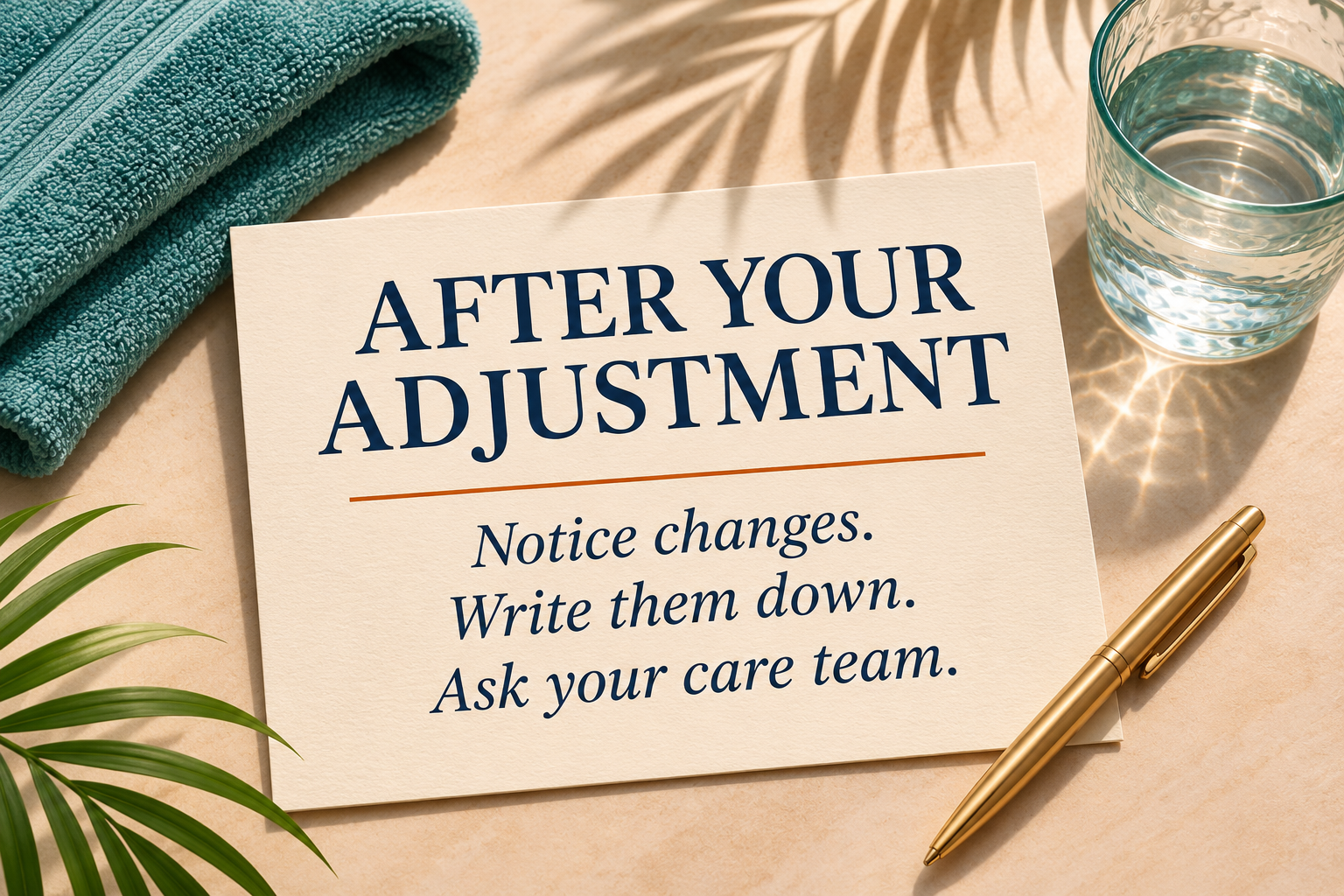
If you feel sore after a chiropractic adjustment, you may wonder whether to wait, call the office, or seek medical care. Mild, temporary discomfort can happen. New or worsening symptoms deserve attention, and certain warning signs need emergency care.
The useful question is how your symptoms are changing and whether anything new has appeared. Soreness alone does not establish that treatment is helping.
What temporary soreness can look like
Spinal manipulation can cause short-lived discomfort, stiffness, or headache. The National Center for Complementary and Integrative Health reports that most of these reactions resolve within 24 hours. This describes a common pattern, not a deadline that makes every symptom before it harmless. NCCIH safety guidance.
If discomfort is mild, note where it is, when it started, and whether it is easing. Compare it with what you felt before the appointment. A brief note about sleep, walking, or another everyday activity can make your follow-up conversation more useful than a pain score alone.
Ask your treating clinician what aftercare fits your condition. Avoid trying to reproduce an adjustment yourself or pushing through an exercise that increases pain. General back-pain advice supports remaining active as tolerated rather than prolonged bed rest, but it does not replace an assessment of new symptoms after treatment. NHS back-pain guidance.
When to call for advice
Contact the treating office or a medical clinician if soreness is not easing, is affecting everyday activities, or is different from what you were told to expect. You can call sooner whenever you are concerned. Do not wait for your next scheduled adjustment to mention a change.
Seek urgent medical assessment for back pain that becomes severe suddenly, worsens quickly, or comes with fever, chills, or feeling generally unwell. NHS guidance on urgent back-pain symptoms.
New numbness, tingling, or loss of strength also warrants prompt medical assessment before further manipulation. Sudden weakness or symptoms listed below require emergency action. Mayo Clinic adjustment precautions.
Warning signs that should not wait
Call 911 for possible stroke symptoms, including sudden facial drooping or one-sided weakness, trouble speaking, vision changes, loss of balance, or a sudden severe headache with no known cause. Do not drive yourself or wait for the chiropractic office to return a message. Symptoms that disappear still need medical attention. CDC stroke guidance.
Seek emergency care immediately for back pain with new trouble urinating, loss of bladder or bowel control, numbness around the genitals or anus, or pain, tingling, weakness, or numbness in both legs. NHS emergency back-pain guidance.
These symptoms need evaluation whether or not they follow an adjustment. A symptom occurring afterward does not, by itself, establish its cause.
Put risk in perspective
Serious spinal, neurologic, and vascular events have been reported after spinal manipulation. NCCIH describes serious adverse events as very rare, while noting that accurate frequency estimates are unavailable. Neck manipulation has been associated with tears in neck arteries, although the causal relationship remains uncertain. Discuss this potential risk before neck manipulation. NCCIH risk discussion.
Treatment is not suitable for everyone. Tell your clinician about your medicines, bone health, bleeding or stroke risk, nerve symptoms, and other medical conditions. NHS safety considerations.
Questions for your next conversation
Our magazine’s Issue 02 patient guide, “Make the Most of Your Visit” on page 33, encourages bringing the details and asking how progress will be reviewed. That conversation is useful after a visit, too.
Bring a short list:
What findings explain my symptoms, and is another medical evaluation needed?
What changes should prompt a call or emergency care?
What benefit are we aiming for, and when will we reassess?
Could exercise-based care, physical therapy, or another approach fit my needs?
Should we pause or change treatment because of this reaction?
Agree on goals that matter to you, such as walking comfortably or completing work tasks. MedlinePlus recommends discussing treatment effectiveness against the goals set at the first visit. MedlinePlus patient guidance.
Frequently asked questions
Does soreness mean the adjustment worked?
No. Judge progress through symptoms, daily function, and agreed goals over time, rather than soreness alone.
Should I wait 24 hours before calling?
No. That timeframe describes many mild reactions, not a required waiting period. Call about concerning symptoms, and seek emergency care for warning signs.
Do I have to continue the same treatment?
Ask to review the benefits, risks, alternatives, and your response before deciding on further care.
Discuss non-emergency questions with OCHW
Learn about chiropractic care at Orlando City Health & Wellness. For routine questions, call Orlando at 407-250-5566 or Winter Park at 407-504-0117, or schedule now for an office appointment. Emergency symptoms belong in emergency care, not an online booking request.
This article provides general education, not a diagnosis or an individualized treatment plan.