

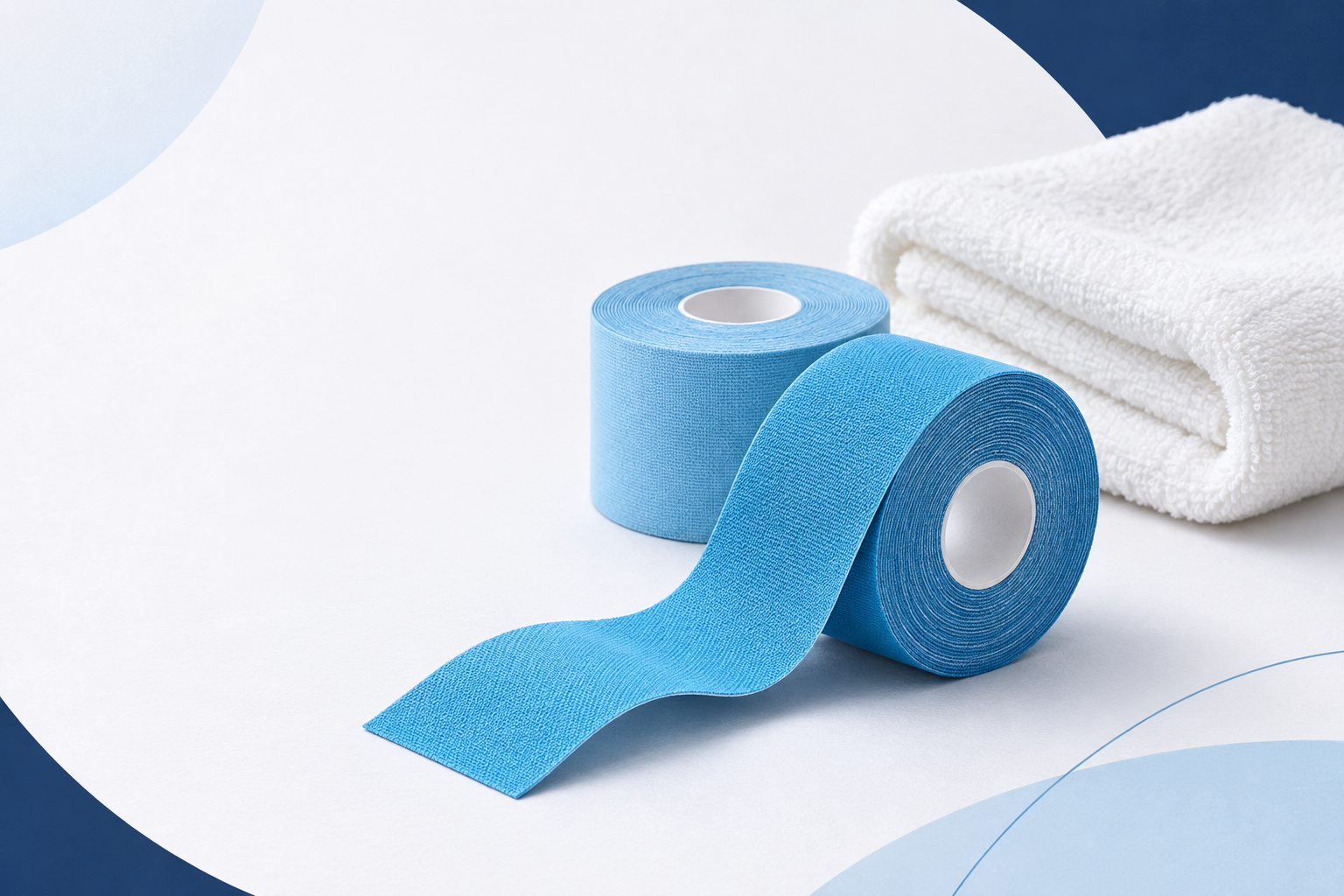
The colorful strip is only one part of the plan. If kinesiology tape is recommended during your care, leave knowing why it is being used, how long your clinician wants it in place and how to remove it without a tug-of-war with your skin.
Our magazine’s Volume 3 introduces kinesiology taping on page 16. This companion guide focuses on the practical questions that come after application, rather than a do-it-yourself taping pattern.
Start with a purpose, not a color
Kinesiology tape is elastic, so it allows movement rather than immobilizing a joint. It is not interchangeable with a brace or rigid athletic tape. Hospital for Special Surgery explains these differences.
Ask your provider what change you should look for. Is there a particular movement to reassess? What should you do if the tape makes no useful difference? Connecting the tape to one clear goal makes the follow-up conversation more helpful than simply reporting that it stayed on.
Tell your clinician about your skin
Before application, mention previous reactions to adhesives, fragile skin, wounds or a current rash. Tape can irritate skin and cause blisters or damage; it should not cover an open wound. HSS identifies skin irritation as a key downside of taping.
A useful question is: “What should I do if this starts itching tonight?” Have the answer before leaving, especially if you have had trouble with bandages in the past.
Agree on wear time and aftercare
Do not assume that every tape or application belongs on the skin for the same number of days. Ask for instructions for the product and your treatment area, including showering, drying and when to take it off. Royal Cornwall Hospitals advises patting taped skin dry rather than rubbing it and avoiding lotions or perfume over the taped area. Its leaflet describes a specific treatment program, so its wear schedule should not automatically become your schedule. Read the hospital’s taping advice.
If itching, redness or irritation develops, remove the tape gently and contact your clinician before applying more. Do not keep irritated skin covered just to complete a planned wear period.
Make removal part of the demonstration
Ask your clinician to show you how to support the skin and peel or roll the tape away slowly. Avoid ripping it off. Water or a suitable oil may help loosen the adhesive, but check the product instructions and your clinician’s advice, particularly if your skin is sensitive. Do not tape over a reaction. HSS and Royal Cornwall Hospitals describe gentle removal.
Your take-home checklist
What is this application intended to help?
When should I remove it, and what symptoms mean sooner?
Can I shower or exercise with this application?
Can you demonstrate removal?
Should I contact you before reapplying it?
Frequently asked questions
Does the tape color change its effect?
No special therapeutic benefit comes from choosing a particular color, according to HSS. Focus on the purpose, technique and skin response.
Can I use tape instead of my prescribed brace?
Do not replace prescribed support on your own. Elastic tape and a brace serve different purposes. Ask the clinician who recommended the brace.
Does tape replace my exercise program?
Ask how it fits with your overall plan. If you already have prescribed exercises, clarify whether anything changes rather than assuming the tape replaces them.
Ask about your care options
OCHW lists kinesiology taping among its care options. For questions about physical therapy and whether taping fits your needs, call Orlando/Baldwin Park at 407-250-5566 or the Winter Park office directly at 407-960-6702. Treatment and appointment availability depend on your individual needs.
General education only. Follow the instructions provided for your own treatment and tape product.